
If there is one thing that defines Varanasi, it is the Ganga. And if there is one place from where you can truly understand the relationship between Varanasi and the Ganga, it is the city’s ghats.
Stretching along the western bank of the river, the ghats of Varanasi are much more than a series of stone steps leading to the water. They are places of prayer, pilgrimage, meditation, cremation, music, festivals and everyday life.
There are many ghats in Varanasi, and you cannot realistically explore all of them during a short trip.
So if you are visiting Kashi for the first time, here are 10 of the most important and interesting ghats in Varanasi that deserve a place on your itinerary.
10. Raj Ghat
Where the ancient story of Varanasi comes alive. Raj Ghat is located towards the northern end of the main Varanasi riverfront and is particularly important for its archaeological and historical significance.
According to the official Kashi portal, Raj Ghat is considered one of the oldest parts of Varanasi and is associated with the city’s early settlement. Archaeological remains have been discovered in the area and the site is protected by the Archaeological Survey of India.
The nearby Malviya Bridge, also known historically as the Dufferin Bridge, is another prominent landmark.
Compared with the bustling central ghats, Raj Ghat can offer a quieter view of the Ganga.
Why visit Raj Ghat?
- Ancient archaeological significance
- Connection with the early settlement of Varanasi
- Nearby Malviya Bridge
- Quieter riverfront
- Interesting for history lovers
Best for: History enthusiasts and travellers looking beyond the crowded tourist areas.
9. Darbhanga Ghat
One of the most photogenic ghats of Varanasi Darbhanga Ghat is particularly attractive because of its grand architecture along the riverfront.
The palace-like structures rising directly above the Ganga create one of the most recognisable architectural scenes along the Varanasi waterfront.
It is a wonderful place to appreciate how royal families and wealthy patrons historically contributed to the architectural character of the ghats.
Why visit Darbhanga Ghat?
- Grand riverside architecture
- Excellent photography
- Beautiful views from the Ganga
- Historic atmosphere
- Close to several other important central ghats
Best way to experience it: During a morning or evening boat ride.
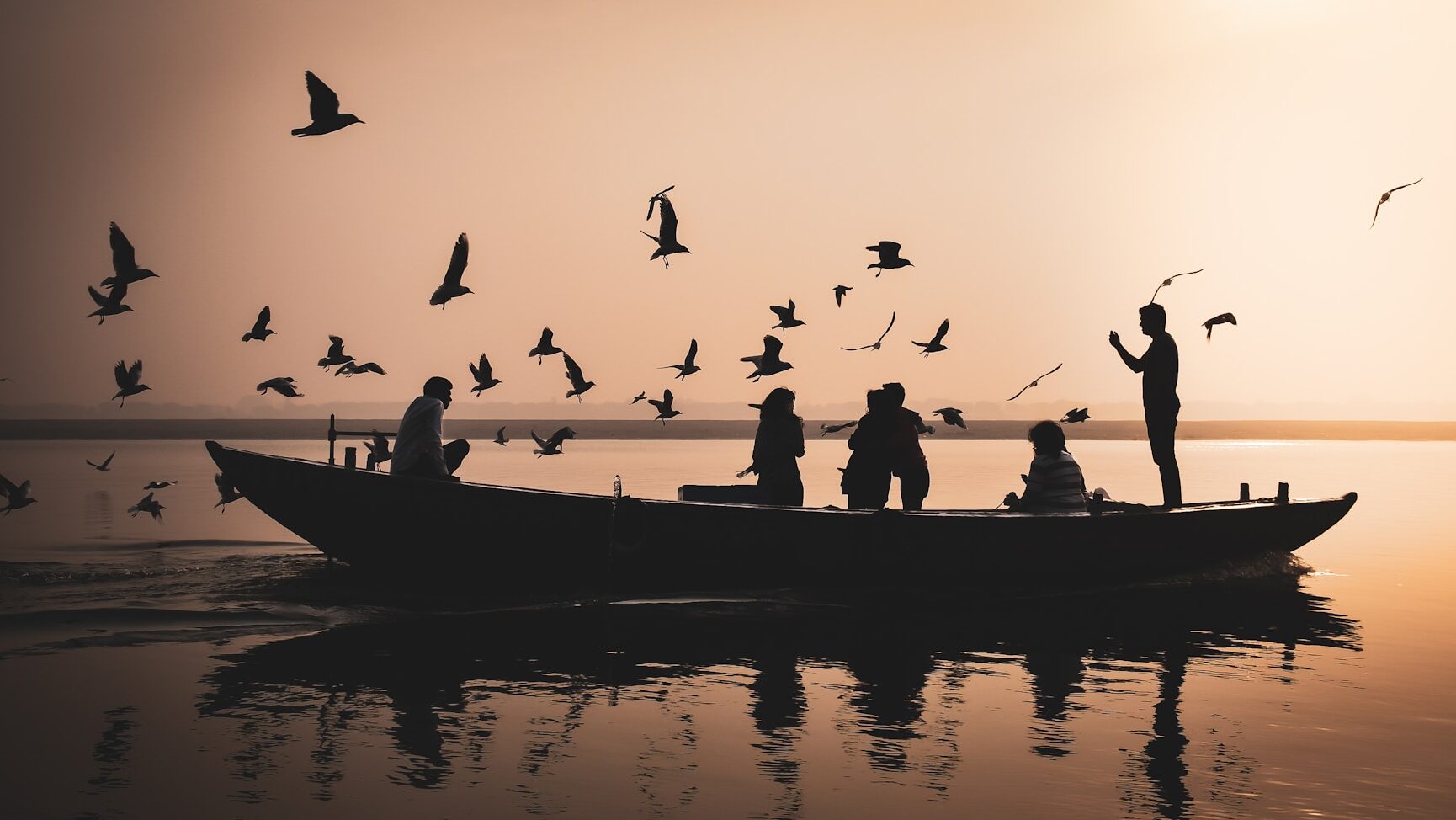
Varanasi Morning Boat Ride Tour
3 Hours Tour
- Max People : 8
- Boat Ride at the Dawn
- Total Ghats of Varanasi
- Hindu Cremation
- Begins 30 minutes before sunrise
8. Kedar Ghat
A spiritually important Ghat in southern Varanasi. Kedar Ghat is one of the important religious ghats in the southern part of Varanasi.
The ghat is closely associated with the Kedareshwar Temple, dedicated to Lord Shiva, and attracts pilgrims throughout the year. Its colourful steps and temple surroundings also make it visually distinctive.
Compared with Dashashwamedh, the experience here can feel more intimate and focused on local religious life.
Why visit Kedar Ghat?
- Kedareshwar Temple
- Religious significance
- Beautiful steps and riverfront views
- Good location for exploring nearby southern ghats
Best for: Pilgrims and travellers interested in temple traditions.
7. Tulsi Ghat
The ghat associated with Tulsidas. Tulsi Ghat holds a special place in the literary and spiritual history of Varanasi.
It is associated with Goswami Tulsidas, the poet-saint traditionally linked with the composition of the Ramcharitmanas. The official Kashi portal notes that Tulsidas resided here and that the ghat also has a monastery, Hanuman Temple and akhara.
Tulsi Ghat is also associated with Ramlila performances during the month of Ashwin. This makes the ghat particularly interesting for people who want to understand the connection between Varanasi’s religious traditions and its literary heritage.
Why visit Tulsi Ghat?
- Connection with Tulsidas
- Hanuman Temple
- Literary heritage
- Ramlila traditions
- More peaceful riverfront experience
Best for: Culture lovers, spiritual travellers and those interested in Indian literature.
6. Chet Singh Ghat
A ghat with a dramatic history. Chet Singh Ghat is where the spiritual landscape of Varanasi meets the political history of the 18th century.
The ghat is named after Raja Chet Singh, the ruler of Benares who became involved in a major confrontation with the British Governor-General Warren Hastings in 1781. The battle took place around the Chet Singh Fort and became an important episode in the history of the region.
The fort still stands above the ghat, making this one of the more interesting riverfront locations for history lovers. The ghat was originally known as Shivala Ghat before this portion became associated with Chet Singh.
Why visit Chet Singh Ghat?
- Historic Chet Singh Fort
- Connection with 18th-century history
- Distinctive riverside architecture
- Less crowded than the city’s most famous ghats
Best for: History lovers and photographers.
5. Scindia Ghat
Famous for its partially submerged temple. Scindia Ghat is one of the most visually distinctive ghats of Varanasi.
It is particularly known for the partially submerged Ratneshwar Mahadev Temple, which appears to lean into the Ganga. The unusual sight has made it a favourite among photographers and visitors exploring the riverfront.
The ghat is also associated with the Scindia family and has a rich history of religious and cultural activity. The official Kashi portal notes that the ghat has been reconstructed and remodelled several times and has historically been associated with different ascetic traditions.
Why visit Scindia Ghat?
- Famous partially submerged temple
- Beautiful architecture
- Historic significance
- Less hectic than Dashashwamedh
- Excellent photography opportunity
Best way to see it: From the Ganga during a boat ride.
4. Man Mandir Ghat
Where history, architecture and astronomy meet. Man Mandir Ghat is one of the most fascinating ghats for travellers who want to discover a different side of Varanasi.
Above the ghat stands the historic Man Mandir Palace, built by Raja Sawai Man Singh of Amber. But the real surprise is what lies inside the palace.
The complex contains an astronomical observatory associated with Maharaja Jai Singh II, who established observatories at several locations in India. The instruments were designed to study celestial movements and measure time using geometry and astronomical calculations.
Standing beside the Ganga while looking at these historic astronomical instruments gives you a fascinating reminder that the intellectual history of Kashi extends beyond temples and religious traditions.
Why visit Man Mandir Ghat?
- Historic palace
- Astronomical observatory
- Beautiful views of the Ganga
- Architecture and history
- Excellent stop during a ghat walk or boat ride
Best for: History lovers, photographers and architecture enthusiasts.
3. Manikarnika Ghat
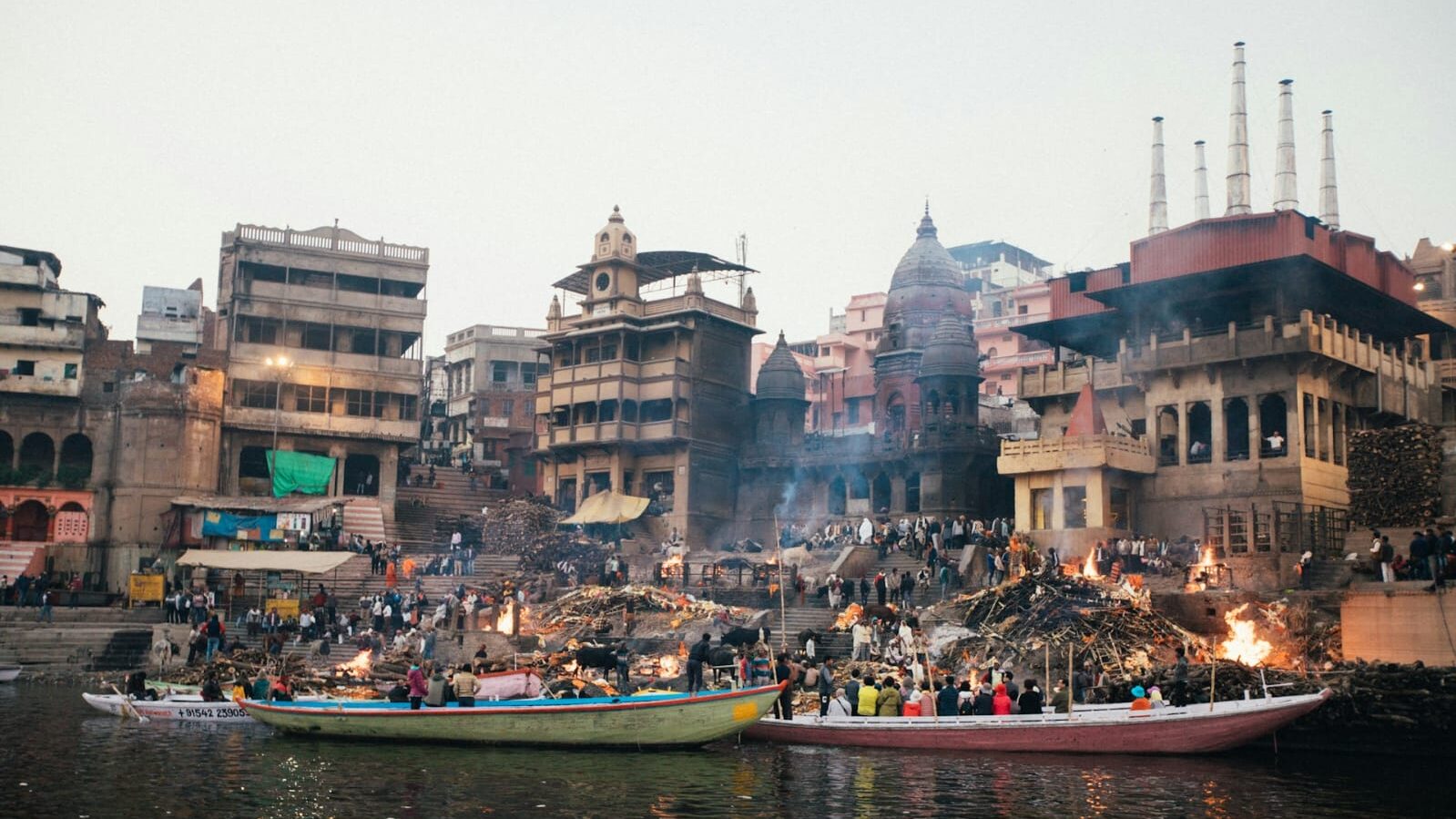
One of the holiest cremation grounds in India. Manikarnika Ghat is perhaps the most profound and emotionally powerful ghat in Varanasi.
It is one of the city’s most sacred cremation sites and is deeply connected with Hindu beliefs about death, liberation and the cycle of life.
The ghat is also associated with several ancient legends, including stories connected with Lord Shiva, Goddess Parvati and Lord Vishnu.
Manikarnika is not a conventional tourist attraction. People come here to perform the last rites of their loved ones. That is why visitors should approach the area with respect and sensitivity. Photography of cremation rituals should never be treated as entertainment and local rules and requests should always be respected.
Why is Manikarnika important?
- Major Hindu pilgrimage site
- Sacred cremation ground
- Deep connection with the spiritual traditions of Kashi
- Important part of understanding Varanasi’s philosophy of life and death
Best approach: Visit respectfully and avoid intrusive photography.
Varanasi Heritage Walk
3 Hours Tour
- Max People : 8
- Hidden Alleys of Varanasi
- Cultural & Religious Diversity
- Ancient Architect
- Hindu Cremation & Ghats of Varanasi
- Any time from 9:00 AM to 4:00 PM
2. Assi Ghat
The best ghat to experience Varanasi at sunrise. At the southern end of the main ghat stretch lies Assi Ghat, where the Assi River meets the Ganga.
It is one of the most popular ghats in Varanasi and has a distinctive atmosphere that is different from the crowded central ghats.
Assi Ghat is especially famous for Subah-e-Banaras, a morning cultural and spiritual experience involving Vedic chanting, classical music, yoga, meditation and prayers as the sun rises.
This is one of those places where waking up early is genuinely worth it. Sit on the steps. Watch the first light appear over the Ganga. Listen to the prayers and simply watch Varanasi begin another day.
Why visit Assi Ghat?
- Beautiful sunrise
- Subah-e-Banaras
- Morning prayers and yoga
- Boat rides
- Cafés and guesthouses nearby
- More relaxed atmosphere than Dashashwamedh
Best time: Early morning.
1. Dashashwamedh Ghat
The most famous ghat in Varanasi. If you have seen photographs of Varanasi, there is a good chance you have already seen Dashashwamedh Ghat.
Located close to the Kashi Vishwanath Temple, it is one of the city’s most prominent and busiest ghats. Its biggest attraction is the Ganga Aarti, which takes place every evening.
As evening arrives, priests perform the elaborate ceremony with large lamps, incense, flowers and sacred chants while bells and conch shells fill the atmosphere.
From the steps of the ghat, from nearby rooftops or from a boat on the Ganga, the sight can be extraordinary. But Dashashwamedh is not only about the evening. During the day, the ghat is full of pilgrims taking holy baths, performing rituals and offering prayers.
Why visit Dashashwamedh Ghat?
- Famous Ganga Aarti
- Close to Kashi Vishwanath Temple
- Vibrant atmosphere
- Excellent riverfront views
- Great place to begin exploring the central ghats
Best time: Evening for Ganga Aarti and early morning for a quieter experience.
Why Are the Ghats So Important to Varanasi?
The ghats are important because they bring together almost every aspect of life in Kashi. They are places where people:
- Pray
- Bathe in the Ganga
- Perform religious ceremonies
- Meditate
- Celebrate festivals
- Perform last rites
- Meet friends
- Make a living
- Listen to music
- Watch the sunrise
- Spend time with family
That is why the ghats cannot really be understood as ordinary tourist attractions. The official Incredible India tourism portal describes the ghats as the spiritual heart of Varanasi and notes that each has its own history and significance.